The Art of the Handwoven Rug
Centuries of Persian craft, woven one knot at a time.
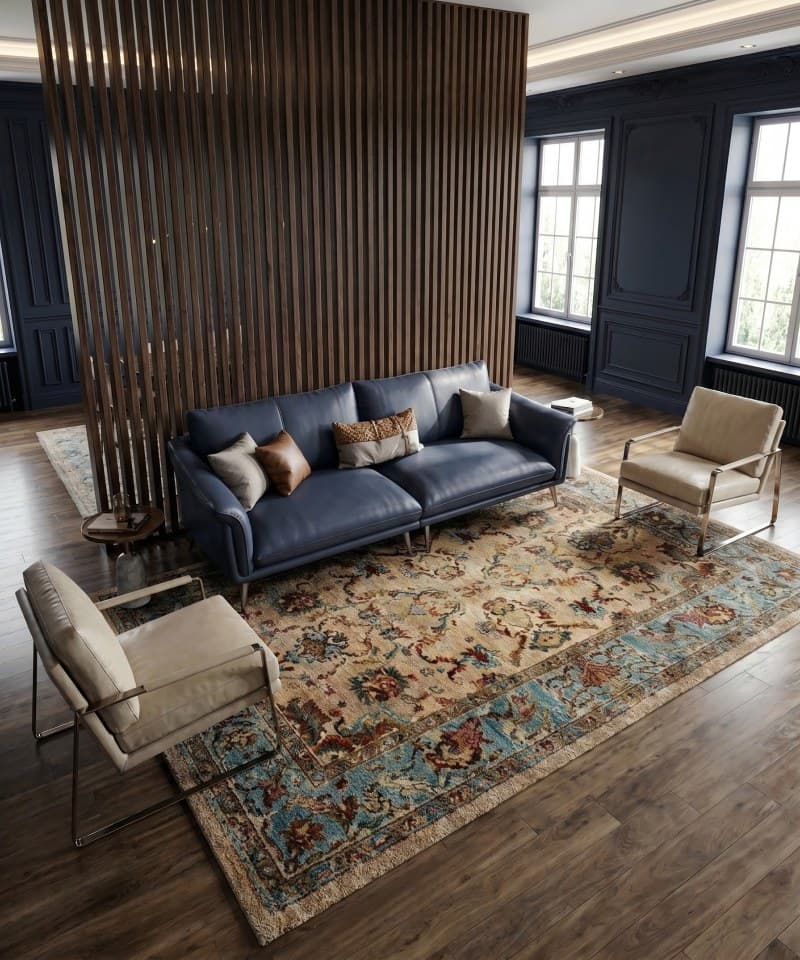
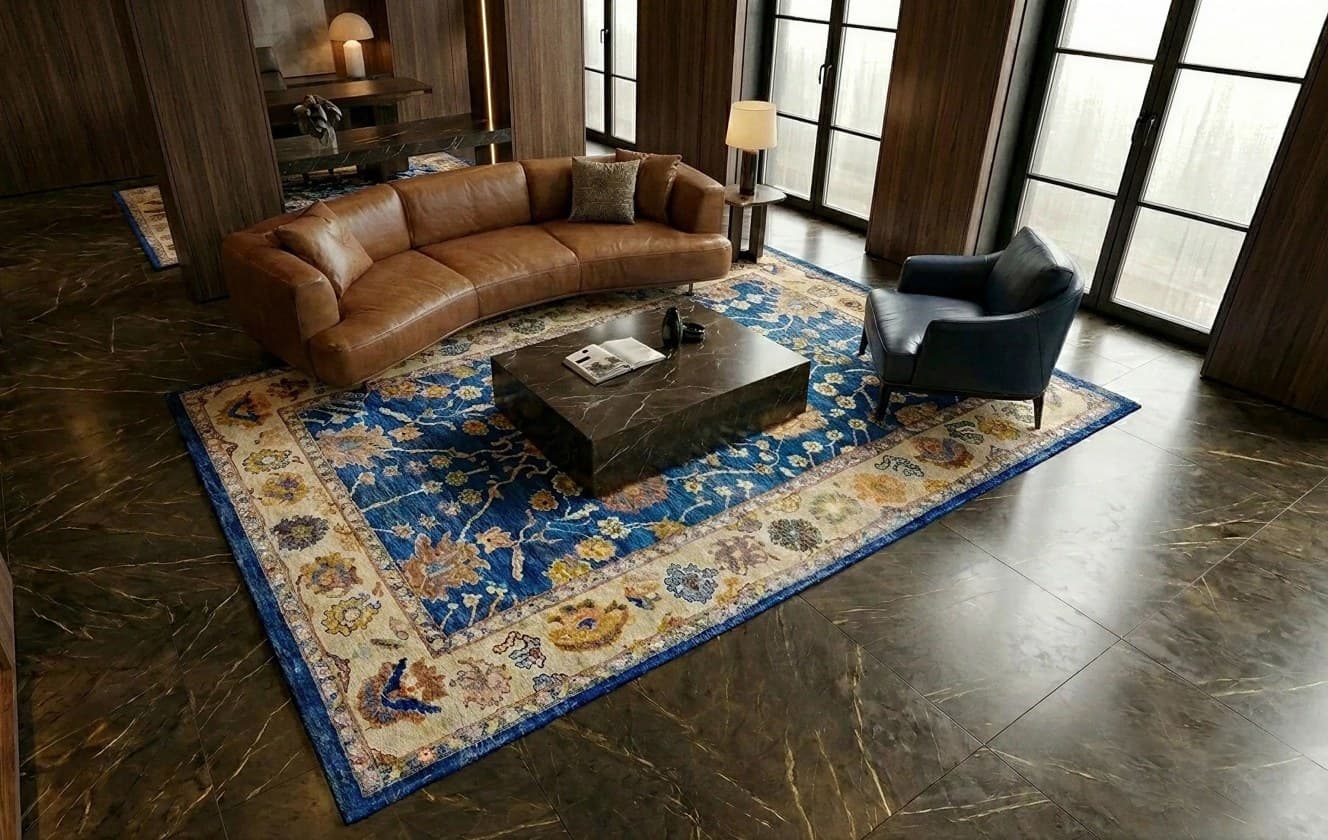
The most common rug mistake is not colour or pattern — it is size. A rug that is too small makes furniture float and a room feel smaller than it is. Get the proportions right and everything else falls into place.
As a rule, the rug should be large enough for at least the front legs of every seat to rest on it. Better still, fit all four legs and let the rug define the whole seating area. Leave a consistent margin of floor — roughly 20 to 30 centimetres — between the rug and the walls.
In the dining room, measure the table and add at least 60 centimetres on every side so chairs stay on the rug even when pulled out. In the bedroom, a large rug under the lower two-thirds of the bed gives you something soft underfoot each morning.
When in doubt, size up. A rug that is slightly too large always reads better than one that is too small.
Measure the space, mark it out with tape, and live with the outline for a day before you decide.
Villaria Home is a Tehran atelier sourcing handwoven rugs and considered décor for refined interiors. Our editors write about craft, provenance and how to live with the pieces we carry.
Centuries of Persian craft, woven one knot at a time.
The quiet trick behind rooms that feel finished.
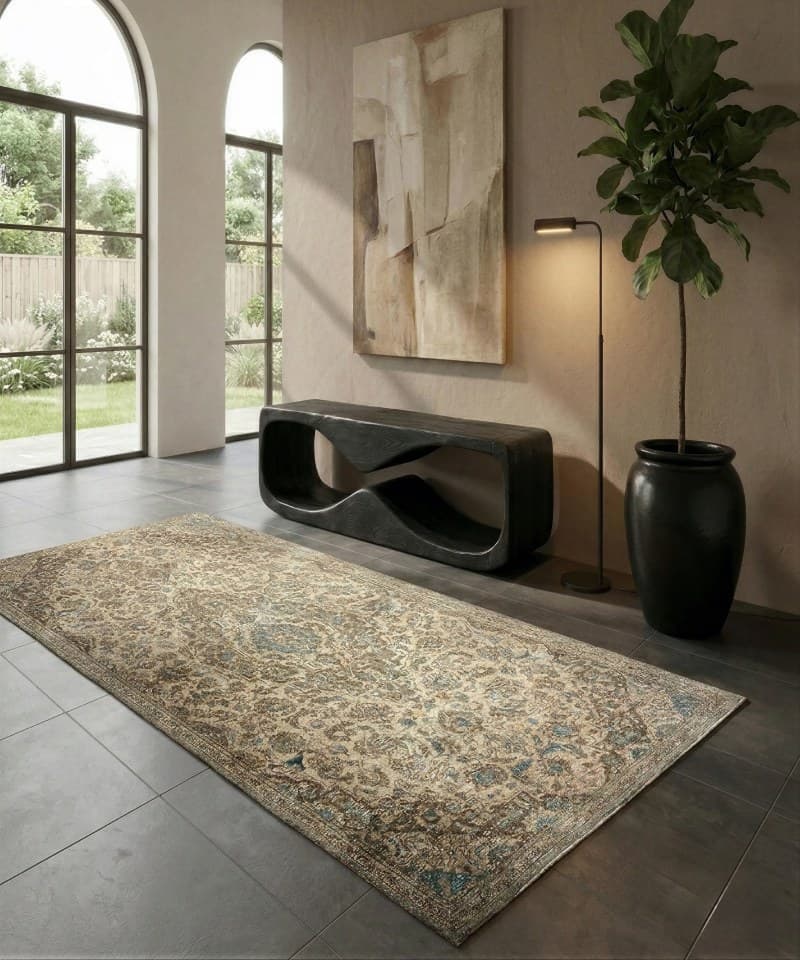
A medallion, a garden, a repeating boteh. Persian rug patterns are a vocabulary, and knowing a little of it changes what you see on the floor.
Cold months mean closed windows, heavier traffic and dry air. A few habits that keep a hand-knotted rug looking the way it did the day it arrived.